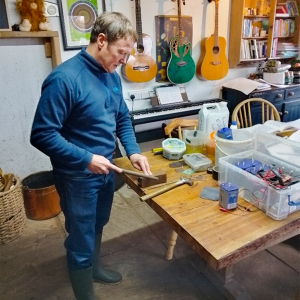
 The starting point for my experience of teaching copper etching at Eyam Farm was a planning meeting with Brantwood Garden School’s science lead, Alona Fletcher. Alona and I looked at the KS3 National Curriculum for science and how Brantwood’s planning cycle fitted within it. For the autumn term, we wanted to cover the topic of ‘Electricity – Current, Voltage and Resistance’. Alona lent me a box of electrical components from the school’s science lab, which I used for teaching electrical circuits to a group of students at Eyam Edge Farm. All the students enjoyed this, particularly the part about building circuits with multiple lights and buzzers.
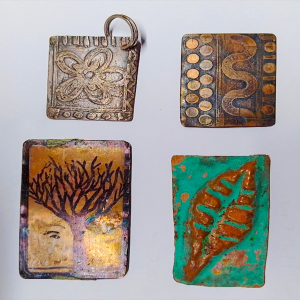
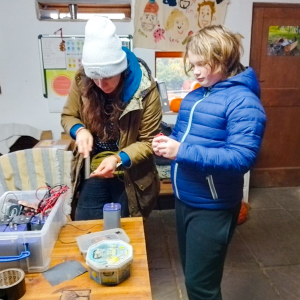
Next, I attended a parents’ Saturday morning workshop at Eyam Edge Farm, led by Steve Dawes, our blacksmith tutor. Steve and I had discussed how to link the National Curriculum topic of electricity to our PSTE method, and it was Steve’s idea for me to learn copper etching and then cascade this to students. The parents and I really enjoyed learning the process and making copper keyrings, which we took away with us. Firstly, we had to decide on a shape for the keyring and snip and file a piece of copper sheet. Next, we had to design an image using letter and/or shape metal punches, or draw it with a Sharpie pen. Then we attached the electrical wires to 6-volt batteries and submerged our designs in a salt solution to watch the copper fizz! After 45 minutes, our keyrings were removed, cleaned, holes drilled, and steel rings attached.
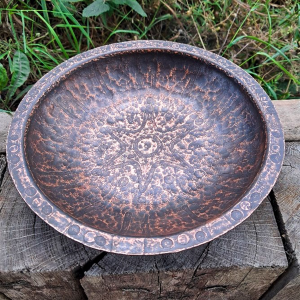
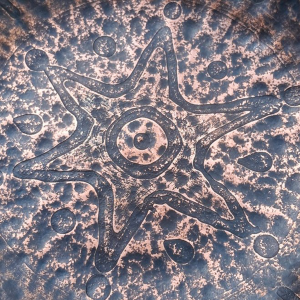
The students enjoyed this process, particularly the use of the copper snips, hammer, and files to create their shapes. We had time to discuss prior learning on electrical circuits and components. We discussed how people have made copper jewellery and bowls for thousands of years, and that the Copper Age was also known as the Chalcolithic or Eneolithic period. We also learned about copper being mined and smelted to produce a workable metal. Some students progressed to parents’, copper bowl making and etching.
This was an extremely rewarding experience as it allowed for taking the starting point of a National Curriculum core subject topic and literally shaping this into finished pieces of work, using hand, head and heart, and numerous processes within PSTE.
Ed Colton
Teacher